
An Instigation of Idiocies*

By Kit-Bacon Gressitt

Super Bowl’s Slippery Slope

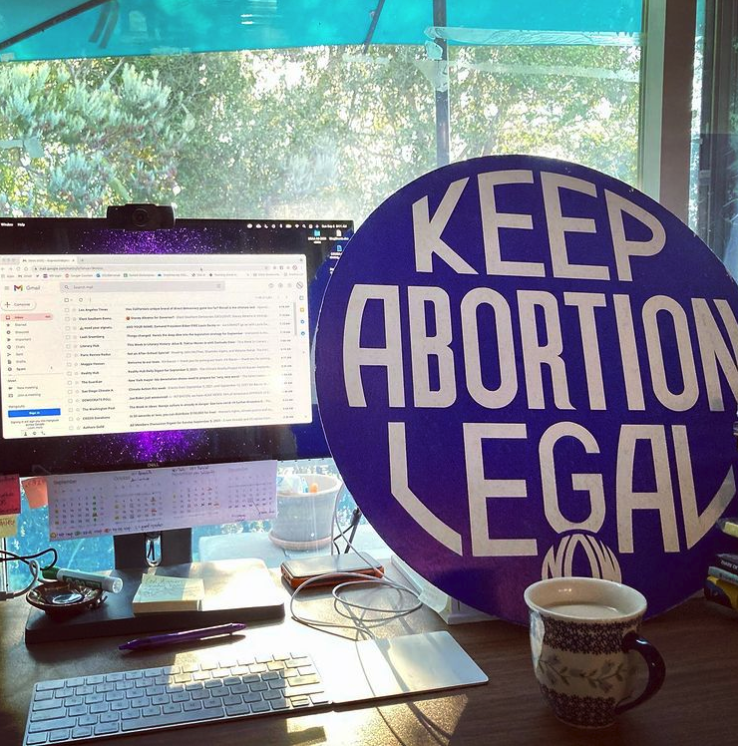
Oh ye gods! A Focus on the Family advertisement spurning abortion — during the Super Bowl? What is CBS thinking in allowing such an ad during the preeminent U.S. televised sporting event? This is no time for polemics! There are beers to drink, chips to dip, high fives to slap, manly sideways hugs to share. What has the Super Bowl come to?!

Nothing much more than it’s been since Super Bowl I in 1967.

The Super Bowl is a dandy marketing machine for the National Football League and its advertisers. The machine works because 100 million folks are willing to devote a Sunday afternoon to balls, boobs, and clever, sexist and crude ads — a list to which we can now add “dogmatic,” thanks to the abortion ad — all to the tune of $2.5 to $2.8 million for a 30-second spot.

So?

So of course CBS would run Focus on the Family’s ad regardless of its advocacy content. Of course the media corporation would make a decision based on profit. Of course, if you think political propaganda an inappropriate diversion from men hurling their hulking bodies into one another and scantly-clad gals shaking those things they shake so well, you could spurn the ad and instead follow the crowd to the kitchen for more brew, hit the head to tinkle — or write a check to National Abortion Rights Action League (NARAL) so they can buy their own ad next year.

Ah, what CBS has started!

Carly Fiorina for Shepherdess?

Carly Fiorina is running for something in California, but suddenly the seat to which she aspires is not quite clear.

The former Hewlett-Packard chair and CEO was booted out by her board in 2005 and trotted off with a $21.4 million payout for her failed strategy that included laying off more than 17,000 workers. Her golden parachute eventually landed her a role as financial advisor to Senator John McCain’s 2008 presidential campaign, which touted putting an end to multimillion-dollar payouts to failed CEOs. Oops.

Then, last November, Firorina announced her candidacy for the U.S. Senate, hoping to oust California’s incumbent Senator Barbara Boxer. Fiorina did make a wee bit of a public confession in her announcement: She hadn’t bothered to visit her polling place much, believing her vote wouldn’t make any difference. Oops.

Now, Fiorina has launched a campaign advertisement (view it below) that reveals several things voters might find interesting about her and her campaign. Read no further, however, if you are weak of heart, as some of the revelations are shocking — shocking, I say!

• Fiorina’s rival in the Republican primary election, former California Congressman Tom Campbell, is either a devil-eyed wolf in sheep’s clothing or the Fiorina team has an unnatural preoccupation with Bo Peep’s sheep.

• Fiorina categorizes California’s male fiscal conservative leadership as a flock of sheep. One wonders how that flock — the one she’ll rely on for help if she aces the primary — feels about her depiction of them.

• Fiorina finds “purity,” “piety,” “wholesome,” “honorable” and “true believers” worthy of some rather dark sarcasm. A bemusing tactic, given her desired conservative voting base.

• And that pedestal — the one from which the devil sheep is toppled — it looks like, well, something unmentionable in pure and pious company.

Perhaps Fiorina and her team have smoked too many of those greenbacks she snagged from Hewlett-Packard’s stockholders. Or it could be that Fiorina’s true calling is not the U.S. Senate but YouTube — as a producer of political satire. How refreshing, if we’ve actually found a public figure who can laugh at herself.

And that is a far, far better thing to imagine than the prospect of a campaign season befouled by bizarre mudslinging from Fiorina.

Save the Pigs

U.S. Senator Richard Shelby (R–Ala.) pulled a fast procedural maneuver on Thursday, putting a blanket hold on all presidential nominees (70 or more) — until he gets the billions of dollars he believes are his state’s due. His ploy has been lambasted as a self-serving, obstructionist pork hunt, particularly for the delay it will cause in Department of Defense appointments.

It is a rather blatant display of chutzpah, conspicuous amid a pomposity of politicians. But Shelby has never been coy: He’s the fickle Democrat who leaped to the other side of the aisle the day after Republicans gained House and Senate majorities in 1994. This time, however, he has outdone both himself and precedent.

The combination of Shelby’s elevated pork lust, Fiorina’s sheep obsession and CBS’ evangelists touting life over abortion amidst men battling to feminize each other in opposing end zones, brings to mind Cicero’s commentary, “Any man may err, only a fool persists in error.”

Let’s see which, if any of the three, self-defines according to Cicero.

©2010 Kit-Bacon Gressitt

* For a fabulous collection of terms of venery, read An Exaltation of Larks, by James Lipton.

No Comments

Fallbrookisms 04 February 2010

Jeopardy! Wednesday night

Category: Food Festivals

Holy guacamole. Visit Fallbrook for a festival celebrating this fruit.

And the question is…

Bumper stickers

Save a horse. Ride a cowboy.

Don’t believe everything you think.

Read more Fallbrookisms

No Comments

Cocktail Hour at Clete and Juanita’s

By Dan McClenaghan


September heat drove the drinking out onto the patio, Ruth and Juanita at the picnic table with the pitcher of margaritas, Ellis and Clete on folding chairs at the edge of the lawn with their beers and Clete’s surreptitious little bottle of whiskey. The guys got loud first, but the ladies weren’t too far behind, and then Clete made a crude remark about Megan, Juanita’s niece, who had been living with them for the last year. The gist of Clete’s comment was that Megan was something of a tart.

Juanita glowered and told Clete to shut his mouth. The whiskey made Clete tell Juanita that if she didn’t like what he said she could just do something about it.

She burst from her chair with the intention of stalking over and strangling him, but he was saved by the fortuitous arrival of a meteor that blazed in out of the black sky and blasted down on the lawn behind the drinking party with a concussive burst that bounced the foursome back against the stucco wall and gouged a swimming pool-sized crater into Clete and Juanita’s back lawn.

“Oh my,” said Juanita, suddenly sober, from her new seat on the cement.

“I’ll be go to hell,” Clete added.

Ellis got up, drained the beer he hadn’t spilt a drop of, rubbed the stubble on his jaw and tossed the empty can into the crater where it levitated like something let loose by the astronauts.

“Holy Christ alive,” said Ruth, as Ellis reached over the void to retrieve the can, teetered a bit too far and fell into a puzzling disobedience of gravity, where he floated, flapped his arms like a butterfly improbably massive, and grinned like a goofball, then farted, jet propelling himself to the crater’s edge and back down to Earth.

The party took on a new dimension then, and might have — had the foursome been younger — evolved into nakedness and zero G sex. Instead the beered-up guys got their kicks by peeing, propelling themselves backward like airborne squid over the hole in the ground, disgusting the women and leaving yellow peppercorn-sized urine globules hovering around their playground.

Ellis left his flip-flops out there, twisting and tumbling in gentle slow motion over the crater. And when niece Megan, the alleged tart, came home with an unsavory man — slipping in the side gate to sneak through the sliding glass door to her bedroom — and they saw what was happening over the new hole in the lawn with those rubber sandals, that’s when the low gravity sex got rolling.

©2010 Dan McClenaghan

About the author: Dan McClenaghan is an award winning fiction writer. His short stories have been published by PearlWormwood ReviewThe BridgeNew York QuarterlyTidepools and Turbula.net.

Note: Photo by Sara Collaton via a Creative Commons license.

Writers

Want to submit your work to Excuse Me, I’m Writing for the sheer joy of having an audience? Email your original fiction, creative nonfiction and poetry — 2,500 words maximum — in an MS Word document or in RTF to kb@kbgressitt.com. If we publish your work, you keep all rights, including bragging.

No Comments

Fallbrook’s Writers Read Presents

An Evening With Bestselling Author T. Jefferson Parker

Thursday 11 February, 5:30 p.m.

Café des Artistes
103 S. Main Street, Fallbrook, CA

5:30 Doors open, supper menu available
6:00 to 7:30 T. Jefferson Parker reading, Q&A and book signing

In T. Jefferson Parker’s new novel, Iron River, detective Charlie Hood is running the California-Mexico border with the ATF, searching for the iron river — the massive and illegal flow of handguns and automatic weapons that fuels the bloody cartel wars south of the border. Gunrunners by nature aren’t exactly ethical, but the lengths they’ll go to, and the innocent lives they’ll risk, are shocking even to Hood. Most shocking of all is the close personal connection Hood finds wrapped up in events south of the border — a connection that shakes him to his core!

Parker immerses Hood in the very real, dangerous and lawless place along the U.S.-Mexican border, giving us a window into the current problems law enforcement from San Diego to Corpus Christi face everyday.

Join Parker and his Southern California fans for an evening of reading and discussion with the author. Iron River will be available for purchase and signing.

For more information, contact Kit-Bacon at kb@kbgressitt.com or 760-522-1064.

Our special thanks to Mysterious Galaxy Books for providing T. Jefferson Parker’s books for sale and signing at the reading — or order your copies in advance for delivery at the reading. Click here to order in advance and be sure to order only those books identified as ON OUR SHELVES NOW. You can reach Mysterious Galaxy at 858-268-4747.

No Comments

The Number’s Game

By Kate Harding


Charlie’s tan face and blond hair bring sunlight and ballpark smells into this dark little room. One hug is all he has time for and then he’s digging into his gear bag, pulling out his glove and two packs of Doublemint gum. “My surprise for you is in here somewhere.”

There is only one thing I want — an engagement ring.

Ten days ago I left school, my job, my cozy room in a boarding house to come to Cotton Valley with Charlie. I was so in love I couldn’t see past his dusty dashboard. But sitting here alone while he’s been on a road trip has helped to blow the dust away. Even though I’m still technically a virgin, Charlie and I are shacking up. If my mother were alive, she’d kill me.

“You’re all in white,” he says. “As if you already knew.” He’s grinning like a psycho. He must be new at giving presents. He pulls out a purse. It’s white and shaped like an envelope.

“It’s lovely.” I hope my chirpy voice hides my disappointment.

“Look inside.”

I unsnap the purse and pull out sheets of paper.

“My score sheets,” Charlie says. “They read almost as beautiful as Shakespeare. C. Fain. Four for four, first game at Modesto,” he says.

He spreads the sheets with the filled in diamonds on the table. “You’ll never guess what my average on the trip was — .555. I’m sizzling.”

“Congratulations,” I tell him. “I’m glad things are going so well for you.” I look out the window. The small houses were probably pretty ten years ago, before the earthquake. Now, porches sag, paint peels. It will take me five minutes tops to fold my clothes, grab my books and walk to the Greyhound bus depot.

“Things are going so well for us. My overall average is .430,” Charlie says.

“That’s wonderful. I’m happy for you.”

“Be happy for us. They have to start me now. I could be a jerk out in the field and they still have to put me in the line up.”

“I’m pleased for you. I really am. Now that you’re doing so well, it’s time for me to go home. I can use the grocery bags to pack my things.” I start toward the closet.

His crazy grin gets bigger. Maybe he really wants me to go.

“Today’s my day off.” Charlie unwraps a piece of gum, tilts his head and studies me. “If you have nothing better to do I thought we could get married.”

I stare at him.

“I know I put you through hell.” He looks around the rented room, the bed where I sleep, the couch where he tries to shrink his six foot two frame to five feet, eleven inches. “I couldn’t ask you to marry me when I only had a .196 batting average. Plus, I was a total jerk in the field.”

My brain feels like cotton candy, but those Fourth of July sparklers are going off inside me. “Do you mean if you were hitting better you would have asked me sooner?”

“I didn’t want you to be stuck with a loser.”

“Your batting average was what made you sneeze when the word marriage came up?”

Charlie nods. “I needed safer numbers. So, do you want to get hitched?”

My answer is a hug. …

Read more

About the author: Kate Harding is a Pushcart Prize nominee in both poetry and prose. Her work has appeared in many journals including Poetry InternationalCalifornia QuarterlyBy Line, and Redbook. She is co-author of a chapbook, Maiden, Mother, Crone, and her chapbook What Women Do was a finalist in the Earth’s Daughter’s Chapbook competition. Kate is a winner of the Lucidity prize in poetry and the Julian Poetry Slam. Her movie, A Berkeley Christmas, was produced and aired by PBS.

Writers

Want to submit your work to Excuse Me, I’m Writing for the sheer joy of having an audience? Email your original fiction, creative nonfiction and poetry — 2,500 words maximum — in an MS Word document or in RTF to kb@kbgressitt.com. If we publish your work, you keep all rights, including bragging.

No Comments

Fallbrookisms 21 January 2010

Coffee chatter


How are you?
Emotionally erect.

Christians should be seen and not heard. If I want to know what they believe, I’ll ask them.

I’ve moved to Oceanside. I just come to town to get my hair cut.
So, have you just been or are you on your way?

A vagina is something you play with. It’s a toy. But you can’t have a relationship with a vagina.

Read more Fallbrookisms

No Comments

The Art of California Dreaming

By Kit-Bacon Gressitt


Have you ever contemplated one of those modern paintings, the kind with an angry splotch of color in the middle of a stark canvas or a confusion of scrawls resembling either Einstein or a toddler’s doodles? You know, the type of art that elicits comments such as “Oh, the stunning textural voids!” or “What an explosive discharge of coloristic energy!” or “The work is imbued with such somber expressivity.” I always figured that sort of art must have some crucial message — if only I were sophisticated enough to receive it. But inevitably it leaves me mournfully resigned to “I don’t get it.”

I used to ponder such art when I’d cut school, escaping the bovine roadblocks surrounding Long Valley, New Jersey, and take the Erie Lackawanna into Manhattan to meet guys in museums. I’d sit there in my hiking boots, ankle-length skirt with appliquéd mirrors and Indian gauze blouse, trying to look somberly expressive and hoping some gorgeous man, preferably a starving artist from Greenwich Village — Hoboken, if all else failed — would notice that I appreciated the stuff.

Autumn Rhythm by Jackson Pollock

Hours of wanton staring at Jackson Pollocks and Cy Twomblys left me with the same derelict of understanding — no epiphany for me — and produced not a hunk to seduce me into his garret and boxer shorts (briefs were of course déclassé). I invariably turned homeward to merely imagine the dramatic effect art’s message would have had on my suburban teenage life and the debauchery, on my burgeoning womanhood.

I finally gave up on modern art and tried the Metropolitan Museum. The pickings seemed better — more guys with accents. It was there that the unrequited itch of my museum window-shopping ended one bright afternoon while I was stoop-setting at the Met with a hot pretzel. I had decided to pose for likely prospects on the museum’s steps in hope of catching one’s glance on the way in. Instead, I caught a scoop of steamy pigeon poop on the shoulder of my Indian gauze blouse. It was the type of guano that results from supping on the rotting bowels of a city: an explosive discharge of coloristic caca. With tortured vanity, I cut a quick path to Penn Station, determined never to return to my truant haunts.

Funny, as it turned out, my youthful failure to fathom the essence of abstract expressionism did not after all leave a stunning void in my intimate affairs. I discovered other ways to meet men, indifference proving the most effective. It sent them into a frenzy from coast to coast.

In the mid80s, I had one such encounter with a victim of my nonchalance in front of a David Hockney in Los Angeles. Now, Hockney I can enjoy. For him a tree is a tree, albeit a bit surreal.

Well, I suppose I had lapsed into a mood of indifference, and the fellow was on the scent — like Jack Nicholson on a comely female. I could not shake the guy. He trailed me throughout the museum, the legs of his leather pants slapping with every step. Why anyone would wear leather during July in LA is one of those mysteries Woody Allen would have resolved with a good joke, had he not taken to boinking his stepdaughter. But then, he couldn’t be bothered with California.

I, in contrast, took California very seriously. It was a place to which I wanted to belong. I’d escaped my roots and a husband here. In California, I felt on the verge of titillating independence. No obligations or affiliations to define me. No significant other to say, “She’s with me.” Indeed, I could for once be with no one. I had only to figure out the place. I needed first, though, to get past the East Coast thing. It was like a scarlet letter emblazoned across my chest, an unyielding fetter restricting my words and deeds to those of my socio-geographic heritage. People at work would say, “You’re from the East Coast, right? Yeah, I can, like, tell.”

Tell what? I had no accent, no siblings named Muffy. When I got to town I bought an old VW. I learned to eat sushi without gagging. I gave up my seasonal wardrobe. I had a fling with a Westwood shrink and got a tan. I made friends with lesbians and drank bottled water. I bought expensive running shoes, though I’d deftly avoided running since junior high. I went to an acupuncturist, a black fellow from Newark who’d had no trouble finding his niche.

So why couldn’t I? Why couldn’t I grasp the rhythm and syntax of California? Here they “took” things that back East I convened. They “did” things I was used to eating. They ate things I expected to find in fiberboard! The natives were talking to me, but I just didn’t get it.

As I pondered my failure to acclimatize to my new homeland, the leather pants caught up with me. He wanted to talk Hockney with someone who truly appreciated the artist’s pathos. He could tell from my aura that he, Hockney and I were at one. If we could just join our collectiveness in a more personal space. Perhaps we could pursue our unity at his place?

“Come home with me. I’ve got a Hockney in my al fresco salon. We’ll do some sushi, some Pellegrino. Confab on his juxtaposition of photorealism and the surreal. Babe, I’m here now. No games. I want you. Let’s have sex. Then we can hot tub.”

Now the leather was a turnoff, and his lack of connectives made for disturbingly staccato conversation. But suddenly an ethereal connection arced between us. In a blast of regional enlightenment, I realized this guy was speaking Californian — and, and I could truly hear him! I finally got it! The stunning textural voids spoke to me. The explosive discharges of coloristic energy, the somber expressivity, they all made sense. Perfect sense!

The paintings? No, I’ll never understand them. But at that moment I realized I would surely make it in California, because at long last I knew its true essence: In California, hot tub is a verb.

©2010 Kit-Bacon Gressitt

Writers

Want to submit your work to Excuse Me, I’m Writing for the sheer joy of having an audience? Email your original fiction, creative nonfiction and poetry — 2,500 words maximum — in an MS Word document or in RTF to kb@kbgressitt.com. If we publish your work, you keep all rights, including bragging.

3 Comments

O Tempora O Mores!* or Ode to Flight 2542

By Kit-Bacon Gressitt


“You don’t mind if I sit here, do you,” he said. After his briefcase hit the empty seat.

I looked up from my book and was not surprised by what I found: older white male, expensive suit, assumptive bearing, and a physique to match the sonorous voice — he was too large even for the exit row. But upon a second, sneaky glance, while he stowed his luggage and adjusted himself into his seat, I noticed the faint hand tremor, the thinning hair approaching white, the hint of a stoop revealing his seventy, maybe seventy-five years.

I let a sigh slip. It was the damn tremor that swayed me, forcing me to close my book — Sue Townsend’s cruelly hilarious spoof of the British royals — and exercise the social graces Mother taught me. Besides, if he’d offered a question rather than a declarative before tossing his briefcase, I wouldn’t have thought twice about his claiming the seat. So I turned to him and said, “Of course not — please join me.”

He looked down at me without making eye contact and nodded a suitable smile in my direction as he unfurled his Financial Times, and I thought I caught disappointment flit across his visage. If only he had boarded a little faster, he might have landed next to the babe who’d sashayed down the aisle before me. She had a caboose even I noticed — as did the hungry hunter who snagged the seat next to her, licking his chops in anticipation of getting a mouthful of those sweet cheeks. So the poor old fellow was stuck with me — baggy jeans and sweatshirt (Father always said I dressed like an old boot) and a befuckled mood (I’d lost the joy of flying when the airlines stopped providing those cool little salt and pepper shakers in coach).

A flight attendant distracted our minimalist encounter when she requested verbal affirmatives from those of us in the exit row, thereby committing us to assisting in the event of an emergency. With the threat of terrorists misbehaving on planes, I took this responsibility quite seriously, but checking out my fellow prospective heroes, I had to question the legitimacy of the airline’s process.

There was one brooding skateboarder, who, upon declaring “Yes” that he was ready and willing to assist, reinserted his iPod earbuds, despite having obediently turned off the contraption, and pulled his baseball cap over his eyes, assuring neither social interaction nor emergency readiness. He was probably dreaming about the sashaying caboose.

Next to him was a gal who appeared to be on her first solo flight post aerophobia treatment. With clenched knees and jaws, her wild-eyed stare boring into the seatback in front of her and barf bag in her lap, she clutched the armrests as beads of sweat grew on her blanched face and nervous snot flicked from her nose.

Clearly neither she nor the kid could be counted on, which lent a new appreciation for my presumptuous seatmate. He looked as though he might still be strong enough to help me hoist the 70-pound door and I, having worked in social services, had proved my crisis-management abilities manyfold. In fact, the aerophobic’s nose reminded me of one such incident at the program I once directed for multi-handicapped blind adults.

I’d received a frantic call to my office from the nurse’s station one sunny California afternoon. “Conrad bit Nadine!” the shift supervisor shrieked.

“Is she OK? Did you isolate Conrad?”

“He bit her! He bit her!”

“Yes, I got that. Take a breath. Is Nadine OK?”

“He bit her! He bit her nose! In her room! There’s blood everywhere!”

“Bring bandages and an icepack to her room.” I ran from my office and met the supervisor at Nadine’s door, where Nadine stood silent and still, hands covering her face and blood drenching her blouse.

“Conrad bit my nose,” she said, dropping her hands to reveal a bloody void where her nose once was.

“Shit. Where’s the nose?” I asked the supervisor. “Did he swallow it?”

She was busy tossing her lunch in Nadine’s trashcan, so I had Nadine press a bandage to her new facial concavity, and I dropped to the floor. There I was, in my tidy little business suit and pumps, crawling across the institutional carpet in pursuit of a nose — which I found under the bed, right where Conrad had spit it.

Later, when I asked him why he did it, he said, “She was rude to me, so I felt for her nose and I bit it.”

So, yep, pushing people down the inflatable slide seemed manageable, as long as the old fellow could indeed help me lift the door out of the way. This thought shifted my predisposition from dislike to acceptance of the man.

Except then he blew it. After folding his newspaper and tucking it in the seat pocket, he settled his elbow on our shared armrest. Now, this alone is an annoying but common maneuver on a plane. Men do it to women without a thought, although bold women preempt it by getting there first. But it was the subsequent pressure of his upper arm against mine that set me off. I shifted every body part that I could toward the empty space between my seat and the emergency exit door, but it was not enough. Still his arm pressed to mine. It was surely an intrusion, and it was unbelievable that he couldn’t feel it.

Now, my Southern upbringing precluded my saying what I was thinking — that he move his fucking arm — so out of desperate discomfort, I leaned forward and buried my face in my book, determined to disregard him the rest of the flight.

But he had other plans. Having consumed his Financial Times, he proceeded to interpret it for the rest of us. “Obama Bin Laden,” he chuckled, “he is doing everything he possibly can to slow down our financial recovery.” My hackles began to rise, and I pretended to continue reading.

“People of wealth will never vote for him again,” he continued, “and the young derelicts who did in 08 might actually acquire the discernment to think twice in 2012, particularly the trust fund kids. I have one client whose offspring have probably voted away their inheritance.”

My pretense shattered and I turned to him, preparing to challenge him for likening the President to Osama Bin Laden.

But he prattled on: “Thankfully, it doesn’t much affect me. I’ve made a lot of money in my lifetime — of course, I am bragging — but, yes, I’ve made a lot of money in my lifetime. It’s long gone, now.” And then he paused, looked at me directly, and laughed a melancholy little laugh. “Most of my colleagues invested in commercial properties, things like that, but I didn’t. I saw the world instead.”

This time, it was that little laugh that swayed me. If nothing else, he deserved some consideration for his regrets, whatever they were. And there was that pesky Southern thing again. So I listened to his stories and nodded, oohed and ahhed in all the right places, and learned that as a young man he’d ridden his motorcycle across Europe; he was divorced years ago and never remarried; he didn’t usually reveal that he was an attorney, but he was; the district attorney and he barely tolerated each other, but he was friendly with a lot of the judges; he had no children he owned up to; he smoked fine Cuban cigars, but of course, he said, he was bragging again.

I patted his arm. “You’re entitled, Honey.” And he regaled me with his stories for the rest of the flight, while the skateboarder snored under his baseball cap and the aerophobic came to her senses and demanded to be moved from the exit row.

•     •     •     •     •     •     •     •     •

The lawyer was on my mind as I drove home from the airport. When I arrived, I Googled his particulars and found his name in an attorney directory, where he mugged with one of his spiffy cigars. I searched for more and found an article. “Sweetie,” I called to my husband. “Look at this. I chatted with this fellow on the plane. In the 80s, he got into a wee-wee contest with a judge over wearing a turban in court.”

“Was he packing explosives in his underwear?”

“I think that’s probably racist, Sweetie. Besides, you joke like that and I’ll have to frisk you.”

“OK, then I’m packing explosives in my underwear.”

“Funny boy.” I kissed him. “Seriously. He refused to explain why he wore the turban, and the judge insisted that he couldn’t wear it without stating a ‘legitimate’ reason. He prevailed eventually.”

“Was he wearing it when you met him?”

“No. I suppose he’d made his point when he won.”

“Hmmm. So, what’s your point?”

“Oh, I’m not sure. It’s just interesting. Nothing, I suppose.” I went back to reading the case, amused by his eccentricities and disappointed I hadn’t been a little nicer. But I don’t know, maybe it was just that Southern thing again.

©2010 Kit-Bacon Gressitt

*Oh the times! Oh the customs! – Cicero, 63 BC

(NOTE: Photograph by Nathan Rupert via a Creative Commons license.)

Writers

Want to submit your work to Excuse Me, I’m Writing for the sheer joy of having an audience? Email your original fiction, creative nonfiction and poetry — 2,500 words maximum — in an MS Word document or in RTF to kb@kbgressitt.com. If we publish your work, you keep all rights, including bragging.

No Comments

Fallbrookisms — a Holiday Look Back

At Scrooge the Musical

A program note to a child performer: Proud doesn’t begin to say how much we love you!
A member of the audience: No, it doesn’t.

At the Fallbrook Christmas Parade

I love the lowriders!
You and every illegal in town.

At Major Market

Thank god the holidays are over. Now I can go back to being a prick.
Hmmm. Didn’t realize you’d put that on hold.

Read more Fallbrookisms

No Comments

A Short Story by Dan McClenaghan

Note: K-B is on vacation.

The White Guy

By Dan McClenaghan


I’m the only white guy in the bar, on the prowl with a fresh scar on my heart. The women here, with their hard, dark eyes, don’t mind free drinks, and I’m trying to work that angle to land some tail. I sit down with three black-haired beauties — Carmen, Lupe and Raquel.

I offer to buy a round. They smile their assent and upgrade from draft beer to grande margaritas, shots of tequila on the side, and I tell them straight up — a belly full of malt liquor talking — that I like the way they’ve packaged their breasts.

“What the hell kinda talk is that?” says Raquel.

Lupe rolls her eyes heavenward and says she’s going out for a smoke. Carmen knocks back her shot and calls me a pendejo, then nods to Raquel, a private signal, it seems, for the pair to hit the dance floor. Alone out there, they move their bodies like something out of my best dirty dream, while the vatos in their dark glasses, shirts buttoned up to their Adam’s apples, watch with me.

Chuy, the guy who brought me here, slips away from his bartender, sidles over and says, “Somethin’ tells me you ain’t goin’ about this too smooth, carnal.”

“Don’t worry about it, man. I got ‘em right where I want ’em.”

He checks out the dance floor and recommends I shift my attentions elsewhere. The girls stay out there for another tune, and when Lupe returns, smelling of nicotine and fresh perfume, I ignore Chuy’s advice.

“You’re beautiful,” I say.

“You’re a lame ass,” she replies.

“So, your friends are gay?” I nod at Carmen and Raquel, who bump hips with the beat.

“Maybe. Or maybe they just got tired of waitin’ for one of these no-huevos wonders to make a move.” She gestures at the sunglasses guys.

I nod, knowingly. “So, Lupe,” I say. “You wanna dance?”

By night’s end, Carmen and Raquel, holding hands in the parking lot, are looking at me like I’m a piece of shit, but Lupe’s hanging on my arm, her fragrant mane resting on my shoulder. I pat her hand, say, “I’ll be right back,” and trot over to Chuy’s truck. He’s just pulled out of the parking space, his bartender riding shotgun. I tell him I’ve worked my magic, and won’t need a ride home. He says, “Be careful, ese, these dudes, they don’t like you hornin’ in on their women.”

I wink. “Not a problem,” I say, then walk back to Lupe’s Ford Escort, it’s old engine grumbling like a cornered wolverine. Behind the tinted glass, three Cheshire cat grins give off sparks. I reach for the door handle under the scrutiny of a dozen black lenses flashing in the lot lights like the eyes of wild beasts. Lupe guns her engine. The wolverine roars and fishtails away, backfiring, spewing an acrid black fart, its spinning tires peppering me with a shotgun blast of loose gravel before they catch traction, taking my girls bouncing out onto the boulevard.

Little bits of rock drop from my clothes, as that heart scar from a similar, if more sophisticated, money-draining situation, opens and gushes blood, and those guys in the sunglasses — they move in on me with a mission.

©2009 Dan McClenaghan

About the author: McClenaghan is an award winning fiction writer. His short stories have been published by PearlWormwood ReviewThe BridgeNew York QuarterlyTidepools and Turbula.net.

Writers

Want to submit your work to Excuse Me, I’m Writing for the sheer joy of having an audience? Email your original fiction, creative nonfiction and poetry — 2,500 words maximum — in an MS Word document or in RTF to kb@kbgressitt.com. If we publish your work, you keep all rights, including bragging.

No Comments

A New Year’s Eve Story by Hans Christian Andersen

Note: K-B is on vacation.

The Little Match-Seller

By Hans Christian Andersen
(1846)


It was terribly cold and nearly dark on the last evening of the old year, and the snow was falling fast. In the cold and the darkness, a poor little girl, with bare head and naked feet, roamed through the streets. It is true she had on a pair of slippers when she left home, but they were not of much use. They were very large, so large, indeed, that they had belonged to her mother, and the poor little creature had lost them in running across the street to avoid two carriages that were rolling along at a terrible rate. One of the slippers she could not find, and a boy seized upon the other and ran away with it, saying that he could use it as a cradle, when he had children of his own. So the little girl went on with her little naked feet, which were quite red and blue with the cold. In an old apron she carried a number of matches, and had a bundle of them in her hands. No one had bought anything of her the whole day, nor had anyone given her even a penny. Shivering with cold and hunger, she crept along; poor little child, she looked the picture of misery. The snowflakes fell on her long, fair hair, which hung in curls on her shoulders, but she regarded them not.

WindsorChristmasLights were shining from every window, and there was a savory smell of roast goose, for it was New-year’s eve — yes, she remembered that. In a corner, between two houses, one of which projected beyond the other, she sank down and huddled herself together. She had drawn her little feet under her, but she could not keep off the cold; and she dared not go home, for she had sold no matches, and could not take home even a penny of money. Her father would certainly beat her; besides, it was almost as cold at home as here, for they had only the roof to cover them, through which the wind howled, although the largest holes had been stopped up with straw and rags. Her little hands were almost frozen with the cold. Ah! perhaps a burning match might be some good, if she could draw it from the bundle and strike it against the wall, just to warm her fingers. She drew one out—“scratch!” how it sputtered as it burnt! It gave a warm, bright light, like a little candle, as she held her hand over it. It was really a wonderful light. It seemed to the little girl that she was sitting by a large iron stove, with polished brass feet and a brass ornament. How the fire burned! and seemed so beautifully warm that the child stretched out her feet as if to warm them, when, lo! the flame of the match went out, the stove vanished, and she had only the remains of the half-burnt match in her hand.’

She rubbed another match on the wall. It burst into a flame, and where its light fell upon the wall it became as transparent as a veil, and she could see into the room. The table was covered with a snowy white table-cloth, on which stood a splendid dinner service, and a steaming roast goose, stuffed with apples and dried plums. And what was still more wonderful, the goose jumped down from the dish and waddled across the floor, with a knife and fork in its breast, to the little girl. Then the match went out, and there remained nothing but the thick, damp, cold wall before her.

She lighted another match, and then she found herself sitting under a beautiful Christmas-tree. It was larger and more beautifully decorated than the one which she had seen through the glass door at the rich merchant’s. Thousands of tapers were burning upon the green branches, and colored pictures, like those she had seen in the show-windows, looked down upon it all. The little one stretched out her hand towards them, and the match went out.

The Christmas lights rose higher and higher, till they looked to her like the stars in the sky. Then she saw a star fall, leaving behind it a bright streak of fire. “Someone is dying,” thought the little girl, for her old grandmother, the only one who had ever loved her, and who was now dead, had told her that when a star falls, a soul was going up to God.

She again rubbed a match on the wall, and the light shone round her; in the brightness stood her old grandmother, clear and shining, yet mild and loving in her appearance. “Grandmother,” cried the little one, “O take me with you; I know you will go away when the match burns out; you will vanish like the warm stove, the roast goose, and the large, glorious Christmas-tree.” And she made haste to light the whole bundle of matches, for she wished to keep her grandmother there. And the matches glowed with a light that was brighter than the noon-day, and her grandmother had never appeared so large or so beautiful. She took the little girl in her arms, and they both flew upwards in brightness and joy far above the earth, where there was neither cold nor hunger nor pain, for they were with God.

In the dawn of morning there lay the poor little one, with pale cheeks and smiling mouth, leaning against the wall; she had been frozen to death on the last evening of the year; and the New-year’s sun rose and shone upon a little corpse! The child still sat, in the stiffness of death, holding the matches in her hand, one bundle of which was burnt. “She tried to warm herself,” said some. No one imagined what beautiful things she had seen, nor into what glory she had entered with her grandmother, on New-year’s day.

(Image of Christmas at Windsor Castle via Library of Congress.)

No Comments

Londonisms 24 December 2009

London Tube

Ladies and gentlemen, due to a person under a train, there will be no service in either direction between Liverpool Street and Leytonstone. Please take an alternate route.

Mind the gap.

Ambrosia is Greek for ballocks in German.

She was a cheese eater, but she wasn’t that dodgy.

Harrods Dim Sum Bar

Do you have a Harrods Reward Card, Madam?

That’s what dim sum is — lots of little packages of interesting things.

I’m totally smitten with the scallops.

The Daily Telegraph Letters to the Editor

SIR — Those of us in our later years enjoy cruising the death announcements on your Court & Social page. Without any particular malice, we like to know whom we have outlived.

SIR — How do I decorate my home with e-cards at Christmas and show I have more friends than you?

Read more Fallbrookisms

No Comments

From Your MAMMA


Gifts for homophobes we know and love despite themselves

crisis-front-cover2

Here are a few options for opening their eyes in the spirit of the season.

CRISIS: 40 Stories Revealing the Personal, Social, and Religious Pain and Trauma of Growing Up Gay In America

Edited by Mitchell Gold

With a unique blend of up-close and personal stories from some very public individuals and from middle America teens, philanthropist and longtime human rights advocate Mitchell Gold exposes the silent epidemic in growing up gay in America.

AngelsInAmerica


Angels in America

Written by Tony Kushner, Directed by Mike Nichols

HBO’s film adaptation of Tony Kushner’s award-winning play, Angels in America is an “astonishing mix of philosophy, politics” and living gay in the Reagan era. Starring Al Pacino, Meryl Streep and Emma Thompson. Available on DVD.


Prayers for Bobby: A Mother’s Coming to Terms with the Suicide of her Gay Son

prayersforbobby-bookexcerpt

By Leroy Aarons

Based on a true story, Prayers for Bobby portrays the Griffith family’s struggle to adjust to a gay teen son, Bobby, amid his mother’s belief that God will “cure” him. For Bobby, suicide is the resolution; for his mother, finding faith in unconditional love is the cure. Prayers for Bobby might enlighten parents who believe God condemns their homosexual children — and it could save a child’s life. MAMMA says give unconditional love a chance. The book is available in paperback.

No Comments

←Older